
"ICO coffee rankings"
200 article(s) found

Description of Flavor and taste of boutique Coffee beans in El Salvador Coffee producing area
Republic of El Salvador, Repblica de El Salvador in Spanish, the Republic of El Salvador in English. It is located in Central America, bordering Guatemala and Honduras in the north, and the Pacific coastline in the west and south. The smallest country in Central America and the most densely populated country in Central America. The land area is 21393 square kilometers.

Introduction to the quality and taste of Yegashefi Coffee Manor in Ethiopia
Ethiopia Yega Snow Fei Coffee Manor Flavor depressing method Taste quality Gemma introduces Yega Chueh Fen Jima beans: Ethiopian native beans taste: chocolate nuts, tropical fruit sour, black tea. Baking degree: moderate baking suggested adjustment methods: hand flushing, siphon, love pressure and French pressure Yega snow coffee Altland manor sun-dried beans: Esseobi

Introduction to the variety treatment method for describing the characteristics of grinding degree of El Salvador Himalayan coffee
A brief History of Coffee production in 1742, coffee was introduced to El Salvador from the Caribbean (1740). In the mid-19th century, El Salvador's original export pillar Indigo (one of the dyes) received a gradual decline in the development of synthetic dyes in Europe, and coffee gradually became the main export product under the guidance of the government. In 1856, the first 693 bags of coffee beans were shipped to Europe. all long

Overall soft Salvadoran Himalayan coffee flavor manor features boutique coffee beans
The national emblem of El Salvador was used on September 15, 1912. The national emblem is an equilateral triangle whose three yellow lines represent equality, truth and justice. Five volcanoes rise between the Pacific Ocean and the Atlantic Ocean, symbolizing the five countries in Central America. The pole of freedom and the red cap of freedom stand high on the top of the mountain, radiating the light of freedom and liberation. Jin Guangzhong is sa on September 15, 1821.

Flavor and taste is the most complex Ugandan coffee flavor taste introduction boutique coffee
Uganda is located in East Africa, across the equator, mainly located in the Central African Plateau; there are many lakes and has Lake Victoria, the largest lake in Africa. The territory has high mountains and a mild climate; rainy hills and slopes are suitable for growing coffee; Uganda is the birthplace of Robesta species. The most famous coffee in Uganda is Bugisu Arabica. Bugisu is a province of Uganda because
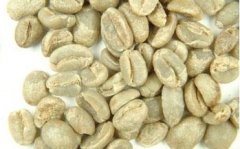
African coffee raw beans Congo Kivu 4/Kivu 4
Kivu coffee is slightly acidity, but citrus acidity is slowly rising full, so the taste is clear and peaceful, coupled with floral, vanilla and erratic tobacco flavor, is a very refreshing and playful coffee.

Ugandan coffee beans with silky texture and rich taste introduce fine coffee.
Bujisu is a region of Uganda; because of its unique volcanic ash cultivation, the Arabica of this region has a very outstanding flavor; therefore, it is grouped into a separate category and is named Bujisu. Bugisu AA is fragrant, soft and sour, impressively bitter and sweet, accompanied by a comfortable chocolate taste. Silky texture, rich taste, mellow, with lazy and charming temperament. Off

Detailed description of AA Flavor Evaluation in Bugisu, Uganda
Professional barista communication please pay attention to the coffee workshop (Wechat official account cafe_style) [product name] Bugisu AA (Bugisu AA) [origin] Uganda (Uganda) [treatment] washing [roasting] recommended baking degree: medium roasting [cup review] the lemon aroma under shallow baking disappears during deep baking and is replaced by a slightly bitter and sweet chocolate biscuit

Introduction of Flavor and Taste Coffee from Coffee Manor in Tanzania
The topography of Tanzania is high in the northwest and low in the southeast, showing a ladder shape. The eastern coast is a lowland, the western inland plateau accounts for more than half of the total inland area, and the East African Rift Valley runs from east to west from Lake Malawi to the north and south. The Kibo peak of Mount Kilimanjaro in the northeast is 5895 meters above sea level, which is the highest peak in Africa. [6] Climate Tanzania Beach Tanzania Beach Tanzania East Tanzania
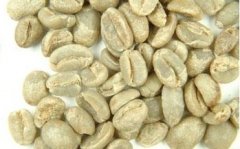
Coffee beans Basics African coffee beans Congo Kivu 4/Kivu 4
[Name] Kivu 4 [Origin] Congo (D.R.) Recommended Roast: Medium or Deep Roast: Distinctive dry aroma: earthy freshness; bright acidity under light flood, Kenyan, and tobacco-like bitterness. Overall performance under deep baking is between Kenya and Indonesia's Mantaning

African coffee raw beans Congo Kivu 4/Kivu 4
[product name] Kivu 4 (Kivu 4) [place] Congo (D.R. Congo) [place] washing [baking] recommended baking degree: medium or deep baking has a unique dry aroma: fresh smell similar to soil; light flood has a bright sour taste, similar to Kenya, and a bitter taste similar to tobacco. The overall performance of deep baking is between Kenya and Indonesia.
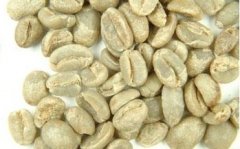
African coffee raw beans Congo Kivu 4/Kivu 4
[product name] Kivu 4 (Kivu 4) [place] Congo (D.R. Congo) [place] washing [baking] recommended baking degree: medium or deep baking has a unique dry aroma: fresh smell similar to soil; light flood has a bright sour taste, similar to Kenya, and a bitter taste similar to tobacco. The overall performance of deep baking is between Kenya and Indonesia.
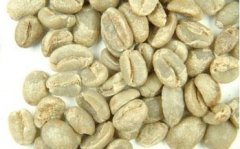
African coffee raw beans Congo Kivu 4/Kivu 4
[product name] Kivu 4 (Kivu 4) [place] Congo (D.R. Congo) [place] washing [baking] recommended baking degree: medium or deep baking has a unique dry aroma: fresh smell similar to soil; light flood has a bright sour taste, similar to Kenya, and a bitter taste similar to tobacco. The overall performance of deep baking is between Kenya and Indonesia.

Introduction of boutique coffee beans in El Salvador coffee flavor and taste producing area
The Salvadoran flag was launched in 1822, rescinded in 1865 and restored in 1912. The Constitution of the year of the Salvadoran Flag in 1972 was officially established as the national flag. The national flag is rectangular, with a ratio of length to width of 335 to 189. From top to bottom, the flag is connected by three parallel equal horizontal rectangles of blue, white and blue, and the central part of the white part is painted with the national emblem. Because El Salvador used to be
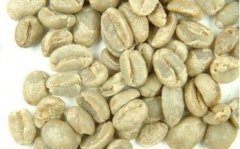
Premium coffee beans recommended African coffee raw beans Congo Kivu 4/Kivu 4
[product name] Kivu 4 (Kivu 4) [place] Congo (D.R. Congo) [place] washing [baking] recommended baking degree: medium or deep baking has a unique dry aroma: fresh smell similar to soil; light flood has a bright sour taste, similar to Kenya, and a bitter taste similar to tobacco. The overall performance of deep baking is between Kenya and Indonesia.

Fine coffee beans African coffee raw beans Congo Kivu 4/Kivu 4
Kivu coffee is slightly acidity, but citrus acidity is slowly rising full, so the taste is clear and peaceful, coupled with floral, vanilla and erratic tobacco flavor, is a very refreshing and playful coffee. [product name] Kiwu 4 (Kivu 4) [place of origin] Congo (D.R. Congo) [location] washing [baking] recommended baking degree: medium or deep baking [cup]

Coffee beans recommend African coffee raw beans Congo Kivu 4/Kivu 4
Kivu coffee is slightly acidity, but citrus acidity is slowly rising full, so the taste is clear and peaceful, coupled with floral, vanilla and erratic tobacco flavor, is a very refreshing and playful coffee. [product name] Kiwu 4 (Kivu 4) [place of origin] Congo (D.R. Congo) [location] washing [baking] recommended baking degree: medium or deep baking [cup]
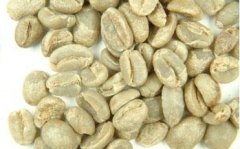
Common sense of coffee beans African coffee raw beans Congo Kivu 4/Kivu 4
[product name] Kivu 4 (Kivu 4) [place] Congo (D.R. Congo) [place] washing [baking] recommended baking degree: medium or deep baking has a unique dry aroma: fresh smell similar to soil; light flood has a bright sour taste, similar to Kenya, and a bitter taste similar to tobacco. The overall performance of deep baking is between Kenya and Indonesia.
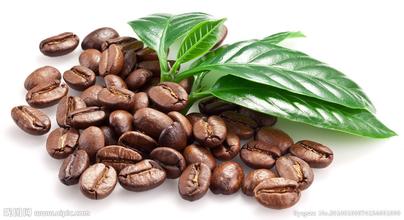
Introduction of Arabica Coffee Manor in Bali, Indonesia
The prosperity of coffee in Indonesia was not sustainable, coffee production was fatally hit at the end of the 18th century, and leaf rust, originally found in West Java, spread rapidly, destroying the Arabica coffee estate in Indonesia. The leading position of the coffee trade was replaced by the American producing countries. However, it is worth mentioning that the leaf rust disaster did not affect the eastern Indonesian producing areas, namely, Flores Island and Timor, today.

A brief introduction to the history of coffee beans in Indonesia
A brief History of Coffee in 1696, the Governor of the Netherlands in Malabar, India, gave a batch of coffee seedlings to the Governor of the Netherlands in batavia in Batavia (present-day Jarkata in Jakarta). This was the first time that coffee was grown in Indonesia. However, the first batch of coffee seedlings were washed away by the flood. In 1699, Batavia received the gift again. This time, the coffee seedlings survived and came first in 1701.